How to Move a Puzzle Without Breaking It Apart
Slide an unfinished puzzle onto a rigid, flat support and keep it level when moving it a short distance. For storage or a longer move, use a roll-up mat or a puzzle binder that fits the puzzle.
On this page (7 sections)
- How do you move a puzzle a short distance?
- What should you do before moving an unfinished puzzle?
- How do you roll up a puzzle without scattering pieces?
- Is a puzzle binder better for moving a puzzle?
- Can you move a puzzle board with the puzzle on it?
- What is the safest way to transport a puzzle in a car?
- How to move a puzzle without breaking it apart: which method fits?
To move an unfinished puzzle without breaking it apart, keep it flat and supported as you slide it onto a rigid board or tray. For longer storage or transport, use a roll-up mat or binder made to hold a puzzle of your size.
The right method depends on the distance, the puzzle surface, and whether pieces are loose nearby. Clear the path first, secure loose pieces, and avoid lifting an unsupported puzzle by its edges.
How do you move a puzzle a short distance?
Slide the puzzle onto a rigid, flat support, then carry the support level with both hands. A thin board, tray, or other sturdy surface helps keep the puzzle from bending while you move it from one table to another.
If the puzzle is already on a board, check that it won't slide before lifting. Keep your hands underneath the board, not on the puzzle's edges.
When the puzzle sits directly on a table, work slowly. Slide the support underneath from one side, stopping if pieces catch or the image starts to buckle.
Make sure the destination surface is clear, flat, and large enough before you start. That way you won't have to hold the puzzle while moving objects out of the way.
What should you do before moving an unfinished puzzle?
Separate loose pieces and clear a path before you lift or roll anything. Pieces at the edges can shift during a move even when the assembled section stays intact.
Gather loose pieces in a container that closes, or use sorting trays with a secure cover. Don't leave pieces on a separate tabletop if that surface will also be moved.
Measure doorways, shelves, and storage spots if you plan to carry a large board. If the puzzle needs to travel in a car, set it on a level surface where it won't slide or have other items placed on top.
For the next step, compare a puzzle table or roll-up mat based on how often you need to clear your work surface. A mat rolls up for storage, while a board can stay flat if you have space.
Would a roll-up mat work for your puzzle?
A roll-up mat can help when you need to store or transport a puzzle in a compact roll. Check the mat's dimensions against your puzzle, and follow its rolling instructions rather than folding the assembled image.
The Becko Roll-Up Mat with Storage Bag includes an inflatable tube, two elastic bands, and a drawstring bag. Its felt surface measures 46 x 26 in and is sized for puzzles up to 1,500 pieces.
Spread the mat flat before assembling or moving a puzzle onto it. When you pause, place the inflated tube at one end and roll with even pressure, then tighten both bands.
Skip rolling if your puzzle doesn't fit the mat or if the surface isn't designed for it. You can also read our guide to puzzle storage ideas for options that keep a puzzle flat.
How do you roll up a puzzle without scattering pieces?
Roll slowly and evenly around the mat's tube, with the puzzle facing inward as the mat instructions direct. Keep the mat aligned so the roll doesn't tighten more on one side than the other.
The Newverest Roll-Up Mat, Up to 3000 Pieces has a 55 x 35.5 in surface, a foam tube, four hook-and-loop straps, a storage bag, and three sorting trays. Its polyester top and rubber bottom give you a smooth surface and a base designed to resist slipping during puzzling.
Put loose pieces in the sorting trays or another closed container before rolling. Don't assume the roll will hold pieces that are sitting outside the mat.
After securing the roll, carry it in its bag and keep it from being crushed. Unroll it onto a clear, flat surface, then check the puzzle and surrounding area for pieces before continuing.
Is a puzzle binder better for moving a puzzle?
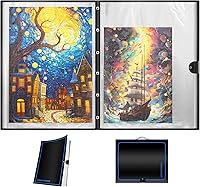
A binder may suit you if you want to carry a puzzle flat instead of rolling it. Confirm that your puzzle fits the binder's dimensions and that its pockets match how you plan to store the puzzle.
The ALL4JIG Puzzle Binder, 500 to 1000 Pieces has 20 clear pockets for puzzles up to 25.98 x 30.31 in, plus a handle. Its maker describes it as a portable storage folder for puzzles in that size range.
Place the puzzle into a pocket carefully, following the binder's instructions. Keep the binder closed and carry it upright by its handle, without bending or squeezing it.
A binder is less useful if your puzzle is larger than its pockets or you need to keep working on a single puzzle laid out flat. For finished puzzles, see how to flip a puzzle over to glue the back.
Can you move a puzzle board with the puzzle on it?
Yes, if the board has a stable surface and you can keep it level during the move. Secure loose pieces first, clear the route, and lift the board with two hands rather than pulling it across the floor.
The ALL4JIG 1500 Rotating Board, 6 Drawers and Cover measures 24.92 x 33.58 in and includes six drawers and a translucent cover. Its maker describes the board as portable and says the cover and closed drawers help keep a puzzle stored between sessions.
Close the drawers and fit the cover before moving it. Check that the whole board can pass through doorways and fit where you plan to set it down.
A loaded board can be awkward to lift, so don't carry it alone if you can't keep it level. For other board styles and uses, see our guide to puzzle boards and how they work.
What is the safest way to transport a puzzle in a car?
Keep a puzzle flat on a firm surface, and secure its loose pieces separately. Avoid placing bags or boxes on top, and keep the board from sliding during turns or stops.
A flat area in the trunk or on a seat may work if the board fits and can be kept level. If you use a roll-up mat, store it where it won't be crushed by luggage.
At your destination, set the puzzle on a stable surface before opening the bag or container. Unroll a mat slowly and check the area around it for pieces that may have shifted.
How to move a puzzle without breaking it apart: which method fits?
Use a rigid support for a short move, a roll-up mat for compact storage, or a binder when you want a flat carry option. Choose a covered board when you want to move the puzzle along with its work surface and storage drawers.
Measure the puzzle before choosing a mat or binder, and clear the route before carrying a board. If you need to keep the puzzle flat between sessions, browse puzzle storage ideas for boxes, folders, and racks.
Frequently asked questions
Can you move a puzzle without taking it apart?
Yes. Keep it flat and supported, and move it slowly with two hands under a rigid board or tray.
For longer storage, follow the instructions for a roll-up mat or binder that fits your puzzle.
Loose pieces should be secured separately so they don't slide into the assembled image.
How do you move a puzzle on a table?
Don't lift the puzzle by its edges or try to carry it unsupported. Slide a thin, rigid board underneath, keep the puzzle level, and carry the board with both hands.
If the table itself moves, secure loose pieces first and make sure the route is clear.
Can you roll up an unfinished puzzle?
You can roll an unfinished puzzle on a mat designed for that purpose. Place the puzzle inside as directed, roll slowly and evenly around the supplied tube, then secure the roll with its straps or bands.
Rolling may not suit every puzzle or surface, so follow the mat's instructions.
How do you transport loose puzzle pieces?
Put loose pieces in a closed sorting tray, pouch, or container before moving the puzzle. Keep them separate from the assembled section, and carry them in a bag or box that won't tip.
Check the destination surface before unsealing the container.