How to Flip a Puzzle Over to Glue the Back
Slide a rigid board under the completed puzzle, cover it with a second board, clamp the layers together, then turn the stack over as one unit. Work slowly on a clear, level surface so pieces stay aligned.
On this page (7 sections)
- What do you need to flip a puzzle over?
- How do you flip a puzzle over step by step?
- What if the puzzle is too large to turn alone?
- How can you keep pieces from shifting during the flip?
- Which glue or saver sheets can you use after the flip?
- What should you do after turning the puzzle over?
- What is the safest way to flip a puzzle over?
To flip a puzzle over safely, slide a rigid board under it, cover the puzzle with a second board, hold the boards together, and turn the stack over as one unit. Clear the work area first, and ask someone to help with a large puzzle.
A slow, supported turn keeps the pieces flat and reduces shifting. Avoid lifting the puzzle by its edges or trying to roll it over like a mat.
What do you need to flip a puzzle over?
You need two flat, rigid boards larger than the puzzle, plus a level surface with room to turn the stack. Smooth boards with no splinters or raised edges are easier to slide and hold in place.
A sheet of cardboard or a spare puzzle board can work if it stays flat under the puzzle's weight. Don't use a flexible material that bends in the middle.
Have a helper nearby for a large or heavy puzzle. You can also use a few small clamps around the outside edges, but they should hold the boards together without pressing on the puzzle.
How do you flip a puzzle over step by step?
Enclose the puzzle between two boards, then rotate the whole stack slowly. Keep the boards pressed together and support the stack from underneath throughout the turn.
- Clear a wide, level area next to the puzzle.
- Slide one board under the puzzle, starting at an edge and moving it in gradually.
- Place the second board on top, lining up its edges with the bottom board.
- Hold the boards together at several points, or have a helper grip the opposite side.
- Lift the stack level and turn it over in one smooth, controlled motion.
- Set it down gently and lift off the board that is now on top.
If the bottom board catches on the table, stop and ease it forward. Pulling hard can shift pieces or bow the support.
For a puzzle that needs to move before flipping, see how to move a puzzle without breaking it apart. That guide covers supporting a puzzle during a short move across the room.
What if the puzzle is too large to turn alone?
Use two people and agree on the turn before lifting. Each person should hold an opposite edge of the boards, keeping the stack level as you rotate it together.
Move loose items and chairs out of the way first. Lift with your legs and keep the boards close to your body so you don't have to reach across the table.
If no helper is available, consider using a puzzle saver sheet on the back once you can access it, or wait until help is available. Don't risk bending a large stack just to finish the job quickly.
How can you keep pieces from shifting during the flip?
Keep the boards flat, apply even hand pressure around the outside, and turn the stack without tilting one edge sharply. A small shift at the edges can spread inward if the puzzle is loose.
If pieces already have gaps, gently nudge them into place before covering the puzzle. Don't push hard on the picture surface or clamp down across the middle.
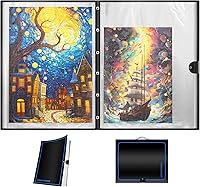
For future puzzles, a board with a cover can help protect pieces between sessions. Compare options in puzzle storage ideas for boxes, folders and racks.
Can you glue a puzzle without flipping it?
Yes, if the adhesive is meant for the picture side and its instructions allow that method. Some puzzlers prefer to coat the front, while others want glue or adhesive sheets on the back.
For a back-side application, flipping gives you access while keeping the image face cleaner. Read the glue directions before starting, and protect the table from drips with a layer beneath the puzzle.
Which glue or saver sheets can you use after the flip?
Choose a method based on whether you want to spread liquid adhesive or apply backing sheets. Follow the product's directions and give liquid glue the time it needs to dry before moving the puzzle again.
Compare the tradeoffs in puzzle glue vs saver sheets before choosing. If you use liquid glue, protect the surface beneath the puzzle and follow the drying directions.
What should you do after turning the puzzle over?
Check that the pieces are still aligned before applying anything. If you see gaps, set the puzzle back down and adjust the pieces gently while it is fully supported.
Apply glue or saver sheets according to their directions. Keep the puzzle flat while the adhesive sets, and avoid lifting it by an edge until it feels secure.
Once preserved, a finished puzzle can be framed or stored flat. Read how to frame a finished jigsaw puzzle for the next steps, including choosing a frame that fits.
What is the safest way to flip a puzzle over?
The safest method is to sandwich the puzzle between two rigid boards and turn the stack with steady support. Use a helper for a large puzzle, and stop if the boards bend or the puzzle starts to slide.
If liquid glue suits your plan, choose it and follow its directions. If you prefer a backing sheet, compare coverage and sizing first, then apply it with the puzzle supported.
Frequently asked questions
How do you flip a puzzle over without breaking it?
Slide a rigid, flat board under the puzzle, place another board on top, and hold the layers together before turning the stack. Use a helper for a large puzzle, keep it level, and move slowly.
If pieces are loose or the puzzle is on a flexible surface, transfer it before attempting the flip.
Can you flip a puzzle without a second board?
You can try sliding one stiff board beneath a puzzle, then lifting and turning it slowly, but the pieces have less support during the move. A second board helps keep the puzzle flat and contained.
For a large or fragile puzzle, wait until you have suitable support or use saver sheets from the back.
Should you glue the front or back of a puzzle?
Either side can be used, depending on the glue instructions and whether you want the image surface coated. Gluing the back can leave the picture face free of adhesive, but it requires a careful flip first.
Read the glue directions and test a small area if the material or finish is unusual.
Can puzzle saver sheets replace flipping the puzzle?
Yes, adhesive saver sheets are applied to the back, so you still need access to that side, but you may not need to spread liquid glue. Support and turn the puzzle with boards, then apply sheets as directed.
Check sheet coverage and sizing before choosing this approach.