Puzzle Table or Mat: Which Suits Your Home? (October 2026)
Choose a puzzle table for a dedicated, adjustable workspace; choose a roll-up mat when you need to store or move an unfinished puzzle. Your available space, puzzle size and willingness to roll the work away point to the better fit.
On this page (8 sections)
- Puzzle table or mat: which fits your home?
- How much space does each option need?
- Which is more comfortable for long sessions?
- How do the table and mats keep pieces organized?
- Which roll-up mat suits your puzzle size?
- Is a puzzle mat easy to roll and store?
- What should you choose for a shared dining table?
- Which should you pick?
Choose a puzzle table for a dedicated, adjustable workspace; choose a roll-up mat when you need to store or move an unfinished puzzle. Your room, puzzle size and need to pack work away matter more than the format alone.
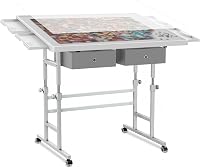
The HEBESPACE table has a 35.43 x 27.87 in work surface, four drawers and a cover. The Becko mat measures 46 x 26 in and rolls around an inflatable tube, while the larger Newverest mat measures 55 x 35.5 in.
These options solve different problems. A table keeps a puzzle on a stable work surface between sessions, while either mat can be rolled and stored when you need the tabletop back.
 Best for a dedicated puzzle space
HEBESPACE 1500 Metal Table with Legs

Puzzle table or mat: which fits your home?
Pick the table if you can give puzzling a dedicated spot; pick a mat if the work needs to move or disappear after a session. A mat still needs a flat surface while you assemble the puzzle.
A table's legs make it a separate workspace, so it doesn't depend on a dining or craft table being free. The HEBESPACE model also adjusts in height and tilts from 0° to 30°.
A roll-up mat is portable storage rather than a freestanding work station. You spread it on a suitable surface, then roll it around the tube when you want to put the unfinished puzzle away.
Read our plain guide to jigsaw puzzle table types if you're weighing a dedicated table against other board styles. It can help clarify what you need from the surface before you decide.
How much space does each option need?
The table needs room to stand and stay set up; the mat needs a work surface while open and storage space once rolled. Consider both the puzzle session and the time between sessions.
The HEBESPACE top measures 35.43 x 27.87 in. Its frame has four casters, two of which lock, so you can move it and then secure it while puzzling.
The Becko mat is 46 x 26 in, and Newverest's is 55 x 35.5 in. Those are larger work surfaces in one dimension than the table, but they need another surface underneath.
Measure your puzzle as well as the room. Piece count doesn't tell you the assembled dimensions, and a work surface that fits the puzzle may leave little room to sort pieces around it.
If your main concern is a setup you can put away, our portable puzzle tables guide covers what to check before you buy. For a larger tabletop surface, compare the options in our boards for 1,000-piece puzzles guide.
Which is more comfortable for long sessions?
The HEBESPACE table offers more ways to adjust your working position; the mats have no legs or height adjustment. Your chair, surface height and preferred angle will shape how comfortable either setup feels.
The table adjusts from 22.16 to 33.27 in high and tilts from 0° to 30°. Its one-touch pneumatic tilt is designed to make angle changes easier, and the drawers have non-slip liners to help keep pieces in place while tilted.
With a mat, your working height depends on the table or other surface beneath it. You can reposition the mat, but it won't raise the puzzle or tilt it for you.
Think about how long the puzzle tends to stay out and whether you change positions. If an adjustable surface is a priority, see our guide to puzzle tables with legs.
How do the table and mats keep pieces organized?
The table has built-in drawers, while the Newverest mat includes 3 sorting trays. The Becko mat comes with a bag, tube and bands for rolling and storing the puzzle.
The HEBESPACE table has four drawers with non-slip liners. Its cover helps shield the unfinished puzzle between sessions, which can be useful if the table remains set up in a shared room.
Newverest includes three sorting trays alongside its foam tube, straps and drawstring bag. The non-slip rubber bottom helps hold the mat in place on the surface beneath it while you work.
Becko's kit includes an inflatable tube and two elastic bands. The bag has a hanging rope and a card slot for a name tag, but the mat itself doesn't have drawers or sorting trays.
Which roll-up mat suits your puzzle size?
Choose by the puzzle's assembled size, then use piece capacity as a rough guide. The Newverest mat is the largest option here and is described for puzzles up to 3,000 pieces.
Becko's 46 x 26 in felt mat is sized for up to 1,500 pieces. Newverest measures 55 x 35.5 in and is intended for puzzles up to 3,000 pieces.
The HEBESPACE table is described for up to 1,500 pieces on its 35.43 x 27.87 in work surface. A 1,500-piece puzzle can still vary in dimensions, so check the box or maker's puzzle measurements before you commit.
Is a puzzle mat easy to roll and store?
A roll-up mat stores compactly, but you need to roll it carefully to protect the unfinished puzzle. Lay the tube at one end and apply even pressure as you roll.
Becko's method uses an inflated tube and elastic bands at both ends. The bag stores the rolled mat, and its hanging rope gives you another way to keep it off a shelf.
Newverest uses a solid foam tube with hook-and-loop straps. Its rubber bottom and polyester top are designed for a smooth work surface and a mat that stays in place during assembly.
A table avoids the roll-up step, but the puzzle and furniture remain in the room. Its cover helps protect the work between sessions, though you'll still need to decide where the table fits when you're not puzzling.
What should you choose for a shared dining table?
Choose a roll-up mat if you regularly need to clear the table; choose a dedicated puzzle table if leaving the puzzle out is the priority. The right option depends on whether your household can spare a surface between sessions.
A mat lets you return the underlying table to meals or other tasks after rolling the puzzle away. Allow time to roll it evenly, and keep the mat on a surface large enough to support the open work area.
A separate table preserves the puzzle setup between sessions. The HEBESPACE table's casters make it movable, but it still occupies floor space and needs a place to stand.
Our guide to puzzle tables with legs explains the dedicated-table format in more detail. If you need a surface that can serve other hobbies too, this table's listed uses include reading, writing, crafts and card games.
Which should you pick?
Pick the HEBESPACE table if you want an adjustable, dedicated workspace with drawers and a cover. Choose the Becko mat for a smaller roll-up kit sized for up to 1,500 pieces, or Newverest for a larger mat with sorting trays and stated capacity up to 3,000 pieces.
Choose by the routine you can keep up: leave the work in place on a table, or roll it away on a mat. For another comparison of compact puzzle surfaces, read puzzle table or lap tray.
Frequently asked questions
Is a puzzle mat or table better for small spaces?
A roll-up mat is usually easier to put away because it can be rolled around its tube and stored in a bag. A table keeps the puzzle ready between sessions but needs floor space.
Measure where you'd puzzle and where you'd store the mat before choosing.
Can you leave a puzzle on a roll-up mat?
Yes, you can leave an unfinished puzzle on a roll-up mat while it is laid flat. To store or move it, place the tube at one end, roll evenly, secure the ends, and put it in the bag.
Rolling takes care, so keep loose pieces in their place.
What is the difference between a puzzle board and a puzzle table?
A puzzle table has legs and stands as its own workspace. A puzzle board or mat sits on another surface, such as a dining table.
A roll-up mat can be stored by rolling it, while a board may have a firm surface or other storage features.
Which option works for a 2,000-piece puzzle?
Of these options, the Newverest mat is sized for puzzles up to 3,000 pieces, while the HEBESPACE table is described for up to 1,500 and the Becko mat for up to 1,500. Check your puzzle's assembled dimensions against the usable work surface too.