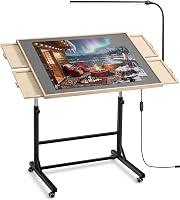
What Is the Best Light for Doing Puzzles?
The best light for doing puzzles is an adjustable lamp that spreads even light across the board without shining into your eyes. Choose a clamp lamp if your table has a suitable edge, and aim it from the side to limit shadows.
On this page (7 sections)
- What makes a light good for doing puzzles?
- Where should you place a puzzle lamp to reduce glare?
- How much light coverage do you need?
- Should you get a puzzle-specific clamp light?
- When does a cordless lamp make sense?
- What should you check before choosing a puzzle light?
- Which light is best for your puzzle setup?
The best light for doing puzzles is an adjustable lamp that spreads even light across the board without shining into your eyes. A clamp lamp can save workspace if your table has a stable edge that fits it.
Aim light from the side of the puzzle, then adjust the arm until pieces are clear without strong shadows or reflections. The ideal setup depends on your table, room lighting, and where you sit.
What makes a light good for doing puzzles?
Broad, adjustable light helps you see pieces across the board while keeping the lamp out of your direct line of sight. Look for an arm or head you can reposition, a brightness control, and enough reach to cover the area you use.
A single fixed light can leave one side of a large puzzle dim. A dual light source may spread light across a wider area, but its placement still matters: reflected light can make glossy pieces harder to read.
Color settings can also help you find a comfortable view. Try a neutral or daylight setting first, then change it if colors look washed out or the light feels too harsh.
Where should you place a puzzle lamp to reduce glare?
Place the lamp to one side and angle the light across the board, away from your eyes. This can make reflections less distracting and help reduce the shadows your hands cast while sorting or placing pieces.
If a bright spot appears on the puzzle, raise or turn the lamp rather than leaning closer. You can also adjust the room light so the lamp isn't the only bright source in a dark room.
The table edge, your seat, and nearby shelves limit where a clamp lamp can go. For a setup built around a lamp, see puzzle tables with lights, which explains the tradeoffs of a built-in option.
Is a dual-head lamp useful for puzzle work?
A dual-head lamp can help if you want light to reach more of the board from one mounting point. The Micomlan Dual-Head Clamp Desk Lamp has two light sources, an adjustable swing arm, 4 color temperature choices, and 5 brightness levels.
Its clamp supports a table edge up to 2.5 in thick. Measure the edge and check for a clear spot where the arm can move before choosing it.
How much light coverage do you need?
Choose coverage based on the puzzle area you use, not just the lamp's brightness. A broad beam can reduce dark corners, while a moveable arm lets you shift light as you work on different parts of the puzzle.
The SUNLINKCO Wide Clamp Lamp, 4 Color Modes, has dual light sources and a stated 71 in lighting width. It also offers stepless brightness adjustment and color temperature from 3000K to 5700K.
The clamp fits desks up to 2 in thick. Check your table edge and the room around it, since a wide lighting area doesn't help if a shelf blocks the arm or the lamp points toward your seat.
If your puzzle takes over a dining or craft table, the guide to jigsaw puzzle tables can help you compare dedicated tables and other work surfaces.
Should you get a puzzle-specific clamp light?
A puzzle-focused clamp light is worth considering when you want a flexible lamp aimed directly at detailed work. Check its reach, clamp setup, brightness options, and whether the included power arrangement suits where you puzzle.
The SEOUFRDZ 18W Clamp Puzzle Light has a flexible gooseneck, adjustable brightness, and a clamp intended for puzzle boards, desks, and craft tables. Its product name says 18W, while its description calls it a 10W LED light, so confirm the exact version and power details before buying.
Consider where the clamp will attach, especially if your board rests on a table rather than having an exposed edge. If you switch between a table and a board, our tips for doing jigsaw puzzles include ways to set up your work area.
When does a cordless lamp make sense?
A cordless lamp makes sense when you need to move it or don't have a nearby outlet. It must sit beside the puzzle, so allow space for its base and keep it from crowding pieces or trays.
The Embar Rechargeable Puzzle Lamp has 2 height options, 10% to 100% dimming, and 3 color temperature settings from 2700K to 6000K. Its maker gives a runtime range of 15 to 150 hours depending on brightness.
This lamp isn't clamp-mounted, so it may take up useful table space. If your puzzle is set up beside a couch or bed, compare the space and reach you have with the advice in puzzle tables for the couch and how to do a puzzle in bed.
What should you check before choosing a puzzle light?
Measure the table edge, board area, and clearance around your seat before picking a lamp. Those checks help you decide whether a clamp can attach securely, whether the arm can reach the puzzle, and whether the lamp will be in your way.
- Clamp fit: Compare the clamp's supported thickness with the table edge.
- Reach and movement: Make sure the arm can cover the puzzle without hitting a wall or shelf.
- Light adjustment: Brightness and color controls help you change the setup for your room.
- Cord or base: Decide whether you have a nearby outlet or room for a standing base.
- Your seat: Position the lamp so it lights the board without shining into your eyes.
Measure with the puzzle board in place if you use one. A board can change how much table edge remains available for a clamp.
Which light is best for your puzzle setup?
Choose the Micomlan if its 2.5 in clamp limit fits your table and you want two light sources with several brightness and color settings. Choose the SUNLINKCO if its stated wide coverage and remote control suit your work area.
Choose the SEOUFRDZ for a flexible gooseneck aimed at detailed work, after confirming the power details and clamp position. Choose the Embar if you need a cordless lamp and have room beside the puzzle for its base.
The best light is the one you can position to cover your board without glare. Set up the lamp first, then adjust its direction from your usual seat.
Frequently asked questions
What kind of light is best for doing puzzles?
An adjustable lamp with broad, even coverage is a good choice for jigsaw puzzles. Position it so the light falls across the pieces without shining into your eyes, and use a color setting that lets you distinguish similar colors comfortably.
A clamp lamp can save table space if its clamp fits.
How do I reduce glare on puzzle pieces?
Move the lamp to the side of the board and angle its light across the surface instead of toward your face. If glossy pieces reflect the lamp, change its height or direction and try a different light setting.
The right position depends on your table, room lights, and where you sit.
Is a clamp lamp good for a puzzle table?
A clamp lamp can work well when the table has a stable edge that fits the clamp and leaves room for the arm to move. Check the table thickness and nearby shelves before choosing one.
For a board that moves between rooms, consider whether the clamp is practical to attach each time.
Do I need a special puzzle lamp?
No. A general desk lamp can light a puzzle if it reaches the board and lets you direct light without glare.
A puzzle-focused lamp may be convenient, but coverage, position, brightness control, and a secure fit matter more than its label.