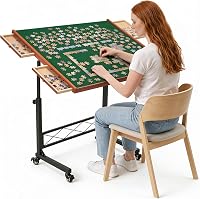
Puzzle Tables with Lights: Is a Built-In Lamp Worth It?
A puzzle table with a built-in light is worth it if you want illumination attached to your puzzle setup. Choose a separate lamp if you need more placement options or want to use it for other tasks.
On this page (5 sections)
A puzzle table with a built-in light is worth it if you want illumination attached to your puzzle setup and don't want to position a separate lamp each time. Choose a separate clamp lamp if you want more freedom to move the light or use it for crafts and reading.
The right choice depends on your table, room and puzzling routine. A built-in bar keeps the light with the board, while a separate lamp lets you position light from the side or move it between work areas.
If the table itself is still undecided, our plain guide to jigsaw puzzle tables explains the main table types. For a broader look at lighting options and placement, see the best light for doing puzzles.
Is a built-in light on a puzzle table worth it?
A built-in light is worth considering when you want a single puzzle setup with fewer separate pieces to place. Its main advantage is convenience: the light is designed to work with the table and stays attached as you puzzle.
A built-in lamp can also limit your choices. Its position and coverage depend on the table design, and a light attached to a movable or tilting surface may need to be repositioned as you change the board angle.
Consider these trade-offs before choosing:
| Built-in light | Separate clamp lamp |
|---|---|
| Stays with the table | Can move between suitable surfaces |
| Keeps setup simple | Offers more freedom to position the light |
| May fold or rotate with the table | Needs room for its clamp and arm |
| Light controls depend on the table | Some models offer brightness and color controls |
If you already have a table you like, a separate lamp may be the simpler addition. If you're buying a table and want lighting in the same setup, compare the bar's angle, brightness options and power needs with how you plan to puzzle.
What should you look for in a puzzle table with light?
Choose a puzzle table with light by comparing where the light sits, how you can adjust it, and what powers it. Those details affect how easily you can direct illumination across the board and set up for a session.
How does the light attach and move?
An integrated light bar is part of the table setup. The Tektalk 1000 Table has an adjustable LED bar that can retract, while the ALL4JIG table has a built-in LED system and an extension tube that can rotate inward for storage.
A separate clamp lamp attaches to an edge. Before choosing one, check that the clamp can fit your table and that the arm can reach the area where your puzzle sits.
If the table itself needs to move or change angle, think through whether the light will still point where you need it. Our guide to tilting puzzle tables covers table angle as a separate decision.
Can you adjust brightness and color?
Brightness and color controls can help you adjust the light for your room and the puzzle surface. The ALL4JIG offers cool, natural and warm light options with 10 brightness levels, while the Tektalk bar is described as soft natural light.
Among the separate options here, SUNLINKCO offers stepless dimming and a color temperature range from 3000K to 5700K. SEOUFRDZ has adjustable brightness and color temperature.
These controls describe flexibility, not a guarantee that a lamp will suit every room or person. If possible, compare how the light can be aimed at your board and whether its controls are easy for you to reach.
What powers the light?
Power needs can affect where you set up. The Tektalk bar uses 3 AA batteries, which are not included; the two clamp lights have an adapter and power cable among their included components.
Check the power arrangement against your usual puzzle spot. A battery-powered bar avoids a cable at the table, while a lamp with a cable needs an outlet within reach.
Which lighting setup fits your puzzle routine?
Choose the setup that solves your main inconvenience. These four options cover an integrated lamp, a lighter table with an adjustable bar, and two separate clamp lights.
ALL4JIG: integrated light with table adjustments
The ALL4JIG suits a buyer who wants lighting built into a table designed for changing puzzle angles. It combines the lamp with a 0° to 90° tilt range, rotation and four drawers.
The listed table size is 32.87 x 24.92 in. Its LED extension tube can rotate inward for storage, and the light system offers cool, natural and warm options.
This setup bundles light and table features together. It may fit you if you want those table adjustments as well as a built-in lamp, but it gives you fewer options to reposition the light separately from the table.
Read more about puzzle tables with drawers if sorting space is part of your decision. The table's storage and adjustments may matter as much as its light.
Tektalk: folding table with an adjustable LED bar
The Tektalk suits someone who wants a table and light bar in a more portable setup. Its foldaway legs and retractable bar are designed to make it easier to store the unfinished puzzle.
The table has 5 angle adjustments from 0° to 30°, raised edges and a flannelette surface. The usable area measures 30 x 20 in, and the maker describes it as fitting most 1000-piece puzzles.
The bar needs 3 AA batteries, which are not included. That can suit a spot without a nearby outlet, though you'll need to supply the batteries.
SUNLINKCO: clamp light with multiple settings
The SUNLINKCO suits someone who wants a separate lamp with several lighting controls. Its clamp attaches to surfaces up to 2 in thick, and the lamp has seven rotating parts for changing its direction.
The lamp supports stepless brightness adjustment from 10% to 100% and a color temperature range from 3000K to 5700K. It also includes a remote control and an adapter.
This option lets you move the light independently of the puzzle board, provided the clamp fits your table. SUNLINKCO also describes it for reading, sewing, painting and other work, so it may be useful beyond puzzling.
SEOUFRDZ: a clamp light made for detailed tasks
The SEOUFRDZ suits someone looking for an adjustable clamp lamp for puzzle work and other hobbies. Its flexible gooseneck is designed to direct light where you need it.
Its listed features include adjustable arm, height and color temperature, as well as dimming. The box includes an adapter and power cable.
The product title calls it an 18W light, but one bullet describes it as 10W. Because those details conflict, check the exact power information before buying if wattage matters to you.
How can you avoid shadows on a puzzle?
Place the light so your hand and body don't block it from the area you're working on. A lamp at one end of the table may cast a shadow as you reach across, so test a couple of positions before you settle in.
A clamp lamp gives you room to try different angles. With a built-in light, check whether its arm or bar can move enough to cover the board from your usual seat.
Room lighting matters too. If the puzzle surface looks unevenly lit, adjust the lamp or add light from the room rather than assuming the table light alone will cover everything.
For more on light placement, brightness and the room around your puzzle, read our guide to choosing the best light for doing puzzles.
Should you buy a table with a light or add a lamp?
Choose a table with a built-in light if you want an all-in-one puzzle station and the table's storage or angle features fit your needs. Consider the ALL4JIG for a built-in system with more table adjustments, or the Tektalk if folding legs and a retractable bar fit your storage routine.
Choose a separate lamp if you already own a table or want to move light between activities. SUNLINKCO offers a clamp, remote and multiple lighting settings; SEOUFRDZ has an adjustable arm and a clamp for directing light at detailed work.
Before choosing, match the lamp's attachment and power to your puzzle spot. For more table choices, browse the light and comfort category and compare the table setup with the lighting you actually need.
Frequently asked questions
Are built-in lights on puzzle tables worth it?
Built-in lights are useful if you want illumination attached to your puzzle setup and don't want to position a separate lamp each time. Compare the light's brightness and angle controls, power needs, and how it folds or moves with the table.
A separate clamp light offers more flexibility if you change work areas.
Do puzzle tables with lights need batteries?
Some do. The Tektalk table's adjustable LED bar needs 3 AA batteries, which are not included.
Check the power details for the exact model you choose, and consider where you'll keep spare batteries or place an outlet before settling on a table.
Can you add a clamp lamp to a puzzle table?
Yes, if the table edge or frame gives the clamp a secure place to attach. Check the lamp's clamp limits and the table's shape before choosing.
A flexible arm can direct light over the puzzle, while a built-in bar stays with its matching table.
What should you compare in a puzzle light?
Compare how widely it illuminates, whether you can adjust its angle and brightness, and how it is powered. Color options can also help you choose a comfortable setting.
For a clamp light, check that it fits the table edge and can reach the full puzzle area.