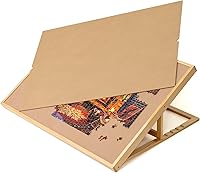
How to Make a Felt Puzzle Board
To make a felt puzzle board, glue a sheet of felt over a stiff, flat backing such as foam board or plywood cut larger than your puzzle, then wrap the edges and add a non-slip base. The felt gives grip and the board gives a flat surface you can move or store.
On this page (12 sections)
- What supplies do you need to make a felt puzzle board?
- How do you choose a backing that stays flat?
- How big should the board be?
- How do you attach the felt to the board?
- Which felt gives the best grip for puzzle pieces?
- How do you add a non-slip base?
- How do you set up and store the board?
- How does a DIY board compare to a store-bought felt board?
- What mistakes make a felt puzzle board fail?
- Which accessories help once your board is built?
- How do you keep the felt clean and grippy?
- What should you check before you start building?
To make a felt puzzle board, glue felt over a stiff, flat backing and wrap the edges, then add a non-slip base so the board stays put. The felt gives puzzle pieces grip and the board gives you a flat surface you can move, tilt or slide under a bed.
This is a weekend project that costs less than most store-bought boards and fits whatever puzzle size you like. The steps below cover the backing, the felt, the glue and the base, plus the mistakes that make pieces slide or the surface warp.
What supplies do you need to make a felt puzzle board?
You need a flat backing, a piece of dense felt, fabric glue or spray adhesive, and a non-slip base material. Add a straightedge, a utility knife and a weight or clamps to hold the felt flat while it dries.
For the backing, foam board is light and easy to cut, while plywood or MDF is heavier and holds a tilt better. Cut the board about 2 to 4 inches larger than your biggest puzzle on every side so loose pieces have room outside the frame.
For the felt, choose a dense craft or wool-blend felt in a 1/8 to 1/4 inch thickness. Thin decorative felt pills and slides, and it won't survive repeated use.
A rubber shelf liner, cork sheet or thin non-slip mat works as the base. You'll also want a soft cloth to press the felt down and a marker to mark the corners.
How do you choose a backing that stays flat?
Pick a backing that won't bend under its own weight or absorb moisture. Foam board is light but warps if it gets damp, so keep it dry and store it flat.
Plywood or MDF is heavier and more stable, which matters if you plan to prop the board on a table edge or a lap desk. A thicker core also lets you drive small screws into a wooden frame if you want a raised lip.
Corrugated cardboard is the cheapest option and works for a temporary board. It loses stiffness over time and sags in the middle, so it's best for a first try rather than a long-term surface.
Measure your table before you cut. A board that overhangs too far tips when you lean on it, and a board that's too small leaves pieces scattered on the table.
How big should the board be?
Size the board to your biggest puzzle plus sorting room. A 1000-piece puzzle is usually about 27 x 20 inches, so a board near 31 x 24 inches gives you space for sorted piles.
For 500-piece puzzles, a 26 x 20 inch board is plenty. If you switch puzzle sizes often, build to the largest one you own and store the extra space when you work small.
How do you attach the felt to the board?
Spread glue evenly over the backing, lay the felt on top and smooth it from the center outward. A spray adhesive made for fabric gives the flattest result on foam board, while a fabric glue works better on wood.
- Cut the felt 2 to 3 inches larger than the board on every side.
- Mark the center of the board and the center of the felt so you can align them.
- Apply glue to the board in strips, working from the middle outward.
- Press the felt down with your hands or a roller, chasing air bubbles toward the edges.
- Fold the overhang around the back and glue it down, clipping the corners so they lie flat.
- Weight the board with books and let it dry fully before using it.
Work in a well-ventilated room and follow the glue's directions for drying time. Felt glued over a damp board can wrinkle and lift at the edges.
How do you wrap clean corners?
Fold the felt over the back and trim the corner diagonally before gluing. A diagonal cut removes the bulk that makes a corner lumpy and lets the felt sit flat.
Pull the felt snug but not tight. Stretching it can distort the surface, and a stretched corner pulls the felt away from the board as it dries.
Which felt gives the best grip for puzzle pieces?
Dense, low-shed felt gives the best grip and lasts longest. The fuzzy face holds pieces without glue or magnets, and a thicker felt cushions the pieces when you press them down.
Wool-blend felt grips well and resists pilling. Acrylic craft felt is cheaper and fine for a first board, though it sheds fibers when cut and wears faster with heavy use.
Avoid felt with a shiny backing or a smooth pile, which lets pieces skate. Test a scrap by placing a puzzle piece on it and tilting the scrap; if the piece slides at a slight angle, the felt is too smooth.
Color matters too. A mid-gray or solid color makes piece edges easy to see, while busy patterns hide gaps.
If you want a store-bought comparison, our guide to the best material for puzzle board covers how felt stacks up against cork and wood.
How do you add a non-slip base?
Glue a rubber shelf liner or cork sheet to the underside so the board grips the table. Cut the base slightly smaller than the backing so it doesn't show at the edges.
A rubber base keeps the board from sliding when you lean on it or tilt it. Cork is lighter and adds a little cushion, but it grips less on smooth tables.
Let the base dry flat and check that the board sits level. A warped base makes the puzzle surface rock, which sends pieces sliding into each other.
Should the board have a raised edge?
A raised lip helps on a tilted board but gets in the way when you sort. A small wooden trim around the edge stops pieces falling off a propped board.
If you puzzle on a flat table, skip the lip. It catches your hand and makes it harder to slide sorted piles toward the center.
How do you set up and store the board?
Set the board on a level table with the felt face up, and store it flat or upright in a dry spot. The felt surface needs no setup beyond a wipe with a dry cloth.
For a tilt, prop the board on a book or a lap desk and check that the lip, if you added one, holds the bottom row. A soft felt face keeps pieces from sliding even at a slight angle.
Store the board flat under a bed or upright behind a door. Avoid damp basements and hot cars, which warp foam board and loosen glued edges.
How does a DIY board compare to a store-bought felt board?
A DIY board gives you a custom size and a soft surface for a low cost, while a bought board adds a stand, drawers or a fold. The felt face does the same gripping job on both.
The TELY Foldaway Puzzle Board Felt Mat shows what a bought felt board offers. It's a felt mat over a foldable core for puzzles up to 1000 pieces, and it folds in half for storage.
If you want a board you can roll away, the Newverest Roll-Up Mat covers up to 3000 pieces with a rubber base and polyester top. That rubber base is the same non-slip idea you'd glue to a DIY board.
Building your own is the better call when you need an odd size or a very light board. Buy one when you want a folding core, a carry bag or a stand without the cutting and gluing.
What mistakes make a felt puzzle board fail?
The common failures are too-thin felt, too much glue and a backing that warps. Each one shows up as sliding pieces or a surface that won't lie flat.
Thin felt is the biggest culprit. A dense 1/8 inch face grips well, while a thin decorative sheet lets pieces drift when you bump the table.
Too much glue soaks through the felt and hardens the face, which kills the grip. Apply thin, even coats and keep the glue on the backing.
Cutting the felt to the exact board size leaves no overhang to wrap. Cut oversize, then trim after the top dries.
Which accessories help once your board is built?
A sorting tray set keeps piles off the felt so the puzzle has the full surface. Trays also make it easier to move a part-finished puzzle without mixing piles.
The Buffalo Games Puzzle Sorting Trays give you 7 interlocking trays with a safety lid for puzzles up to 1000 pieces. They keep sorted piles separate while the board holds the frame.
If you want a board with a stand or drawers instead, our roundup of felt puzzle boards compares the options. The Lavievert puzzle board is another felt board worth reading about if you like a tilting surface.
How do you keep the felt clean and grippy?
Vacuum the felt with a brush attachment and blot spills with a dry cloth. Wash only if the glue allows it, and let the board dry flat before using it again.
Lint and pet hair build up on felt and cut the grip. A quick pass with a lint roller after each session keeps the surface working.
Avoid soaking the felt, which can loosen the glue and warp foam board. For heavier cleaning, spot-clean with a barely damp cloth and dry it right away.
What should you check before you start building?
Measure your table, your biggest puzzle and your storage spot first. Those three numbers decide the board size and whether a rigid or flexible build suits you.
Pick rigid foam or plywood for a board that stays on a table and tilts on a stand. Pick a flexible mat over a rubber base if you need to roll it away.
Either way, dense felt and an even glue coat are what make the board work as a soft, grippy surface.
For more tabletop options, compare the best puzzle boards for adults before you buy or build.
Frequently asked questions
What kind of felt works best for a puzzle board?
Use a dense, low-shed felt sold as craft felt or wool-blend felt in a 1/8 to 1/4 inch thickness. Thin decorative felt pills and slides, while thick felt grips pieces and holds up to repeated rolling.
How big should a homemade felt puzzle board be?
Cut the backing about 2 to 4 inches larger than your biggest puzzle on every side, so loose pieces have room outside the frame. A 1000-piece puzzle needs roughly a 27 x 20 inch working area, so a board near 31 x 24 inches leaves useful sorting space.
Can I roll up a felt puzzle board?
Only if you build it on a flexible mat instead of rigid foam or plywood. A felt mat over a rubber-backed sheet rolls around a foam tube and holds pieces, while a board with a stiff core must stay flat and be stored upright or under a bed.
How do you keep puzzle pieces from sliding on a felt board?
Stick felt to the backing across the whole surface and choose a dense felt with a slightly fuzzy face. Add a rubber or cork base so the board itself doesn't slide on a table, and keep the board level.