How Big Is a 2000-Piece Puzzle? Sizes and Table Fit
A 2000-piece puzzle is often about 38 x 27 in, but its finished size depends on the brand and cut. Check the box dimensions, then leave extra table space for loose pieces and sorting.
On this page (7 sections)
- How big is a 2000-piece puzzle when finished?
- How do you measure a puzzle and choose a table?
- How much extra room should you leave for sorting?
- Can a 2000-piece puzzle fit on a foldable board?
- Is a roll-up mat big enough for a 2000-piece puzzle?
- What kind of table works for a large puzzle?
- How big is a 2000-piece puzzle, and what should you choose?
A 2000-piece puzzle is often about 38 x 27 in, but its finished size depends on the brand and cut. Check the box dimensions, then leave extra table space for loose pieces and sorting.
A surface around 40 x 30 in can suit many puzzles at this size, though it may feel tight if you sort outside the puzzle area. For a table that stays set up, consider the legs, height, and room around the work surface as well as its dimensions.
How big is a 2000-piece puzzle when finished?
Many 2000-piece jigsaw puzzles finish at roughly 38 x 27 in. Treat that as a starting point, since dimensions vary and the exact size should come from the puzzle box or maker.
A rectangular puzzle needs space for its full length and width, with enough clearance to reach the center. A board that matches the finished size exactly can leave no useful room for loose pieces or sorting trays.
If you already know the dimensions of a 1000-piece puzzle from the same brand, don't assume the larger one will be exactly twice as wide or twice as long. Piece counts grow in both directions, and brands use different piece shapes and layouts.
For a comparison of a smaller common size, see how big a 1000-piece puzzle is and what board fits.
How do you measure a puzzle and choose a table?
Compare the assembled puzzle's length and width with the table's usable surface. Add space for the way you work, not just the puzzle itself.
Measure the work surface between raised edges, frames, or other boundaries. If you sort pieces around the puzzle, leave a margin on at least one side or use trays that can sit nearby.
Check the space where the table will stand, too. A large top may fit a puzzle but still block a walkway, drawer, or dining chair when the table is in use.
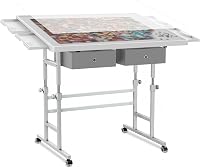
The HEBESPACE table has a 41.34 x 29.53 in work surface described for puzzles up to 2000 pieces. Its adjustable height and tilt can suit a dedicated setup where you want to keep the puzzle out between sessions.
How much extra room should you leave for sorting?
Allow more surface than the finished puzzle takes up if you sort loose pieces beside it. The extra area makes it easier to separate colors, edges, and sections without stacking pieces on the puzzle.
A board near 40 x 30 in may hold the assembled puzzle, but it leaves limited sorting space for some layouts. You can make a smaller surface work by using drawers or separate trays, or by sorting on a nearby table.
The ALL4JIG board measures 28.5 x 40.16 in and includes six drawers and a cover. Its rotating base lets you turn the work area to reach different sections.
A board's stated piece capacity doesn't guarantee that every 2000-piece puzzle will fit. Confirm the actual usable dimensions against your puzzle before choosing a close-fitting surface.
Can a 2000-piece puzzle fit on a foldable board?
It can fit if the board's usable area is larger than the puzzle's finished dimensions. Compare the measurements before you buy, and check how the folded board will be stored.
The Lavievert foldable felt board has a useful area of 41.3 x 30.3 in and is made for puzzles up to 2000 pieces. It has eight drawers, a felt cover, and built-in stands with three tilt angles.
Felt can help keep pieces from sliding on a tilted surface, according to Lavievert. Measure both the board and the place you'll store it folded, especially if it will go under a couch or bed.
For more board styles and surfaces, read what a puzzle board is and how it works. You can also compare puzzle boards for 1000-piece jigsaws to see how smaller boards are sized.
Is a roll-up mat big enough for a 2000-piece puzzle?
A 55 x 35.5 in mat is sized for puzzles up to 3000 pieces, so it offers more area than many 2000-piece puzzles need. Check the finished puzzle dimensions and how much room you want for loose pieces.
The Newverest mat has a smooth polyester top and a non-slip rubber bottom. It comes with three sorting trays, a foam tube, straps, and a storage bag for rolling the mat up between sessions.
A mat is useful when you need to reclaim the table, but rolling requires care so pieces stay in place. Follow the mat's rolling steps and make sure the puzzle fits within its usable area.
See portable puzzle tables and what to check before you buy if you want a work surface that can move without being rolled up.
What kind of table works for a large puzzle?
Choose a table based on how long the puzzle will stay out and how you like to work. A dedicated table suits a permanent setup, while a covered board or roll-up mat can make it easier to clear shared furniture.
A table with legs can give you a stable work height and keep the puzzle off a dining surface. Check whether its surface fits the puzzle, whether it can move through the room, and where it will be stored when not in use.
A tabletop board can go on an existing table, but it still needs a large enough base beneath it. Browse the guide to puzzle tables with legs for options and features to compare.
If sorting is the main space problem, a surface with drawers can reduce the amount of loose-piece area needed beside the puzzle. Our guide to puzzle tables with drawers explains what that storage can help with.
How big is a 2000-piece puzzle, and what should you choose?
A 2000-piece puzzle is often around 38 x 27 in, but use the box dimensions to choose a safe fit. Add working room if you sort beside the puzzle, or plan to use trays and drawers to keep pieces organized.
Choose a table with legs if you want a dedicated setup, a foldable board if storage matters, or a roll-up mat if you need to clear the surface between sessions. Compare those needs with the guide to tables on legs before settling on a work area.
Frequently asked questions
How much table space do I need for a 2000-piece puzzle?
Start with the puzzle's finished dimensions, then leave extra room around it for loose pieces, sorting trays, and your hands. A work surface around 40 x 30 in may fit many large puzzles, but measure the box dimensions first and allow more space if you sort beside the puzzle.
Are all 2000-piece puzzles the same size?
No. Finished size varies by brand, piece shape, and cut, so the piece count alone doesn't tell you the exact length and width.
Check the puzzle box or maker's product information before choosing a board, and leave a little extra room for pieces that sit beyond the assembled edge.
Can a 2000-piece puzzle fit on a 1000-piece board?
Usually not if the board is sized only for a typical 1000-piece puzzle. Compare the puzzle's finished dimensions with the board's usable area, since a close fit leaves little room to sort or work around the edges.
Is a roll-up mat large enough for a 2000-piece puzzle?
Some are. Check the mat's stated dimensions against your puzzle's finished size, and remember that a roll-up mat also needs room for its foam tube and straps when stored.
A mat can help if you need to clear the table between sessions.